One of the most important factors determining the performance of products such as baby diapers, adult care products, feminine hygiene products, and absorbent pads is the structure of the absorbent core. Its main components include SAP (Super Absorbent Polymer) and pulp (cellulose fibers).
The quantities of SAP and pulp, as well as the ratio between these two components, can directly influence how a product acquires, distributes, and retains liquid.
Therefore, SAP/Pulp analysis provides valuable data for product characterization, quality control, and research and development activities.
What Is SAP?
SAP (Super Absorbent Polymer) is a highly absorbent polymer capable of absorbing and retaining large amounts of liquid within its gel structure.
In absorbent hygiene products, SAP primarily contributes to liquid absorption and retention within the absorbent core. When SAP particles come into contact with liquid, they swell and form a gel.
However, a higher SAP content does not necessarily mean better product performance. SAP content should be evaluated together with pulp content, product design, and other absorbent layers.
What Is Pulp?
Pulp is a cellulose-based fibrous material used in absorbent hygiene products.
It helps liquid enter the absorbent core, facilitates liquid distribution throughout the core, and supports liquid transport toward SAP particles. It also contributes to the physical structure of the absorbent core.
For this reason, evaluating SAP and pulp together, including their relative proportions, is essential for understanding product performance.
Why Is SAP/Pulp Analysis Performed?
SAP/Pulp analysis provides important information about the composition and structure of the absorbent core.
The analysis can be used for:
Product characterization
Comparison of different production batches
Evaluation of raw material or manufacturing process changes
Product development and R&D activities
Quality control
Cost and performance optimization
Monitoring SAP/Pulp distribution across different production batches of the same product can help identify changes in manufacturing processes.
Similarly, the absorbent core structures of different products can be evaluated and compared.
How Is SAP/Pulp Analysis Performed?
During the analysis, the absorbent product is carefully opened under controlled conditions, and the absorbent core is separated from the other product layers.
The core material undergoes appropriate sample preparation and separation procedures to isolate SAP, pulp, and, where necessary, fine particle or dust fractions.
The quantities of the separated fractions are then determined to calculate:
SAP content
Pulp content
SAP/Pulp ratio
To ensure reliable and comparable results, sample preparation, separation, and weighing procedures must be performed under controlled and reproducible conditions.
Does the SAP/Pulp Ratio Alone Determine Product Performance?
Although SAP/Pulp analysis provides valuable information about the structure and composition of absorbent products, it does not independently represent overall product performance.
For a more comprehensive assessment, SAP/Pulp results should be evaluated alongside performance parameters such as:
Absorption capacity
Liquid acquisition time
Liquid retention
Rewet performance
This combined approach makes it possible to assess not only the quantities of absorbent raw materials but also how these materials contribute to the performance of the finished product.
Which Products Can Be Tested?
SAP/Pulp analysis can be applied to various absorbent hygiene products, including:
Baby diapers
Adult care and incontinence products
Feminine hygiene products
Absorbent pads and underpads
Other SAP- and cellulose-based absorbent hygiene products
Accurate Analysis for Better-Controlled Product Development
Successful absorbent hygiene product design depends not simply on using greater quantities of absorbent materials, but on achieving an appropriate distribution and balance between SAP and pulp.
SAP/Pulp analysis is a valuable analytical tool that manufacturers can use to support product development, quality control, batch comparisons, and cost-performance optimization.
At SANİTER Laboratory, we provide technical support to manufacturers through analytical testing services focused on the characterization and performance evaluation of absorbent hygiene products, supporting their quality assurance and R&D activities.
Contact us to learn more about SAP/Pulp analysis and discuss the appropriate testing scope for your products.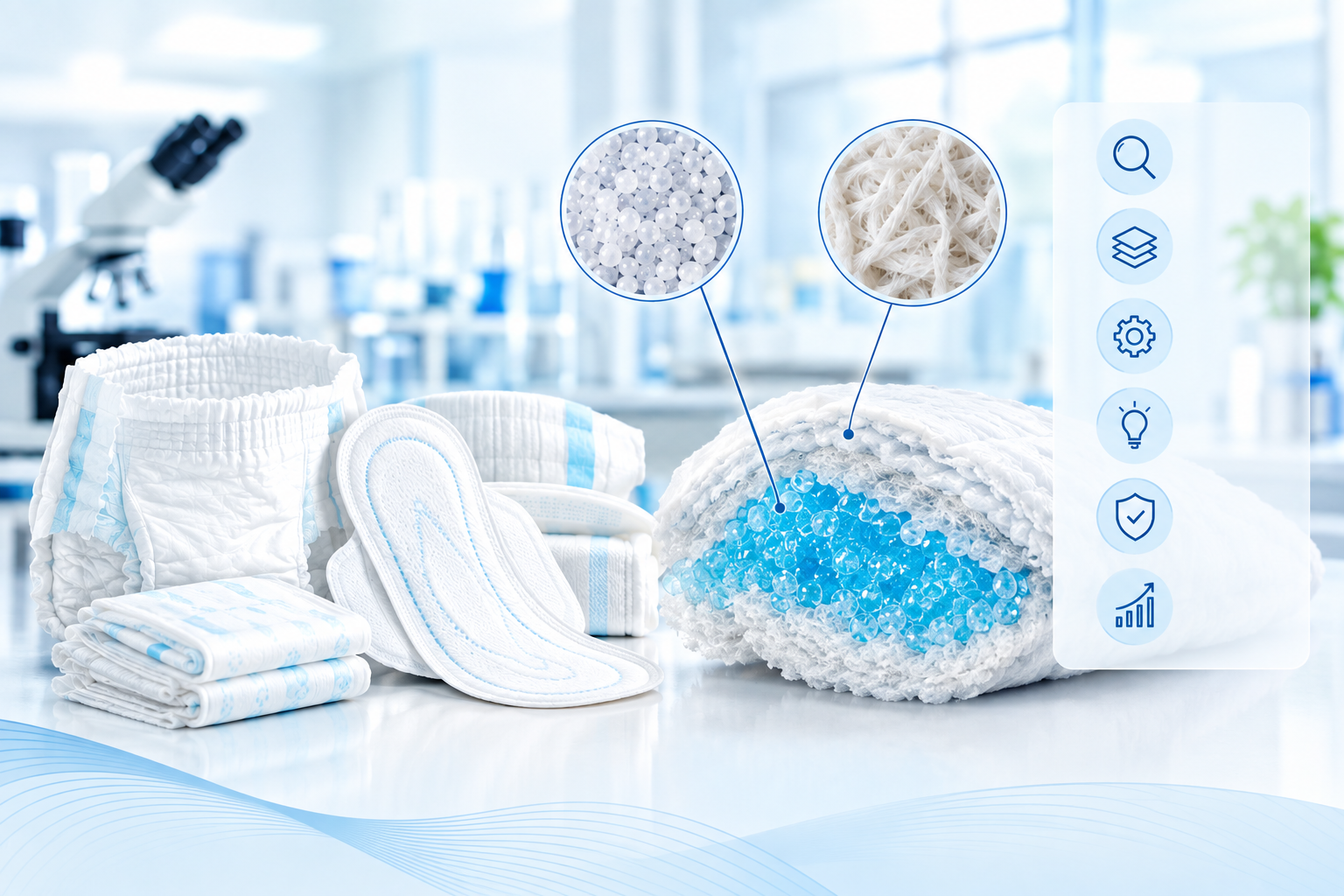
© 1994 | Saniter Gıda – Çevre Bilimi Gözetim Ve Mühendislik Hiz. Tur. Tic. A.Ş.
Web Tasarım: Click to Peak